The Journey Matters: Green Erasmus in Practice
- Home page
- The Journey Matters: Green Erasmus in Practice
Environmental sustainability is one of the key priorities of the Erasmus+ Programme. In international mobility, students are encouraged to choose low-emission travel options through support for so-called green travel. In practice, this means favouring trains, buses, or carpooling instead of flying whenever possible.
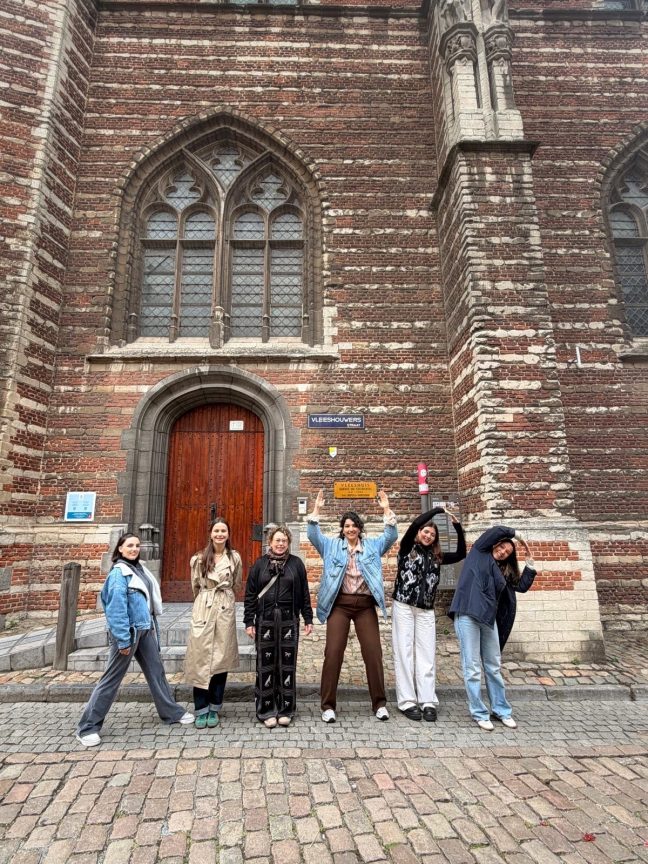
Lotta Tuohino, a student in Food Processing and Biotechnology at Seinäjoki University of Applied Sciences (SEAMK), chose green travel when participating in an Erasmus+ Blended Intensive Programme (BIP) this spring. She took part in the Nutrition International Health Promotion Project, hosted by Thomas More University of Applied Sciences in Antwerp, Belgium. The programme was organised within the framework of the HEROES Alliance, bringing together students from partner institutions across Europe to explore nutrition and health promotion from different national perspectives while developing their international teamwork skills.
Lotta travelled from Helsinki to Belgium by train and ferry. The journey included eight transfers and six travel days.
“I haven’t flown in seven years, and I don’t intend to fly again unless it is absolutely necessary. The climate impact of flying simply cannot be reconciled with a sustainable lifestyle. I find overland travel enjoyable, natural, and a more human-scale way of moving from place to place,” Lotta explains.
Although green travel often requires more time and planning than flying, Lotta sees it as an essential part of the international experience itself.
“I enjoy watching the landscapes change and genuinely experiencing the places I travel through. Green mobility is an experience that flying simply cannot offer.”
Environmental Responsibility in Everyday Choices
Within the Erasmus+ programme, green mobility is supported through increased travel grants and additional travel days. The aim is to make sustainable travel options genuinely accessible to students across Europe. Under the green travel scheme, at least half of the round trip must be completed using low-emission transport such as trains, buses or ferries.
However, the ambition goes beyond reducing travel emissions. Green Erasmus also encourages students to adopt more sustainable lifestyles during their mobility by making environmentally conscious choices related to accommodation, local transport and everyday consumption. International mobility becomes not only an opportunity for academic and cultural exchange, but also for developing lifelong sustainable habits.
In Finland, green mobility comes with its own challenges. Long distances and the country’s geographical location often make overland travel slower and more complex than in Central Europe.
“Planning a long train journey is quite a puzzle. There are many transfers, connections can change, and patience is sometimes required. Still, many difficult situations can be resolved simply by staying calm and waiting for things to work themselves out,” Lotta says.
Responsible Internationalisation Through HEROES
At SEAMK, green mobility is part of a broader commitment to responsible internationalisation. As a member of the European University Alliance HEROES, SEAMK promotes sustainability, regional impact and responsible development as core principles of its international activities. Within the Alliance, internationalisation is fostered through both physical mobility and internationalisation at home, providing students with diverse opportunities to develop global competences in sustainable ways.
“Internationalisation is not only about travelling abroad. It is also about European cooperation, responsible competence, and international learning environments on our own campus. Within the HEROES alliance, sustainability is embedded in all activities,” says Tiina Välimäki, Coordinator of International Education Services at SEAMK.
The HEROES offers students joint European courses, virtual projects, and multicultural learning environments that support internationalisation at home while strengthening intercultural, digital, and sustainability-related competences. At the same time, the alliance seeks to promote increasingly sustainable solutions in physical mobility. As mentioned earlier, the BIP programme attended by Lotta Tuohino is part of the educational opportunities offered through the Alliance.
For Lotta, travelling sustainably is not a one-time decision, it is a long-term commitment. She intends to continue travelling overland in the future, both for her studies and in her leisure time:
“Absolutely. My family and I have purchased Interrail passes during the November sales for several years now, and this summer will be no exception.”
Her story illustrates that international mobility is about more than reaching a destination. It is about making thoughtful choices, embracing new experiences and recognizing that the journey itself can contribute to a more sustainable future.
At HEROES, we believe that every journey is an opportunity to learn, not only from new places and people, but also from the choices we make along the way.