From Individual Efforts to Institutional Approach: How VIKO Is Rethinking Challenge-Based Learning
- Home page
- From Individual Efforts to Institutional Approach: How VIKO Is Rethinking Challenge-Based Learning
Challenge-based learning is not new at Vilniaus kolegija. Several study programmes have been applying it for years, designing coursework around real problems, bringing in external partners, encouraging students to work across disciplines. But until now, these efforts have lived at the level of individual programmes and individual people.
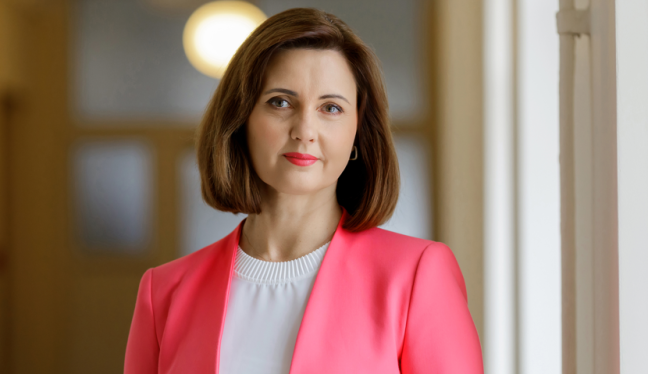
We spoke with Dovile Liubiniene, Head of the Studies Department at VIKO and the institution’s coordinator for challenge-based education in the HEROES Alliance, about where VIKO stands today and where it aims to go.
Being part of the Alliance, she says, is taking the discussion to a new level. The question is no longer whether VIKO applies challenge-based learning, but how to turn individual good practices into a shared institutional philosophy.
In the autumn semester of 2025, VIKO ran four challenge-based modules within the HEROES framework. Students worked on green finance, sustainable transportation, digital systems development, and a real business challenge set by Maxima LT, one of Lithuania’s largest retail chains. Over 150 students took part, collaborating with peers from Finland, the Netherlands, Belgium, Czechia, Germany, Ukraine and Kosovo. Four faculties were involved.
These activities show what HEROES enables in practice. But for Dovile, they also highlight what’s missing. “We have faculties that are doing this, and doing it well,” she says. “But it’s still driven by individual initiatives. We don’t yet have a shared institutional approach, a common thread that ties it all together.” Closing that gap is what VIKO is now working on.
Shared experience, local roots
The HEROES Alliance brings together nine universities of applied sciences, each with different strengths in teaching. When it comes to challenge-based learning, VIKO finds the closest match in what Fontys University of Applied Sciences in the Netherlands and University College of Northern Denmark are doing. Both have significant experience in design-based and challenge-based pedagogies, and VIKO draws most heavily on their experience.
“For VIKO, they are flagships in this area. When you visit Fontys,” Dovile says, “you see how they structure things: external partners are genuinely involved, the challenges are real, and the whole process is designed with intention.”
But the goal is not to replicate what works elsewhere. VIKO already has its own foundations. The Faculty of Business Management, for example, runs a creativity platform built on challenge-based and design thinking principles. The work ahead is to connect what already exists across faculties into a deliberate, institution-wide approach.
The Alliance provides a framework for doing that: shared guidelines, joint quality criteria, and the experience of partners who have walked this path before. But neither frameworks nor guidelines will create change on their own. Change happens in the classroom, and it is shaped by teachers.
The change starts with teachers
When asked what single thing VIKO needs most to move forward, Dovile doesn’t hesitate: teacher training.
“We need to start with our lecturers,” she says. “Not just training on challenge-based learning, but building a shared understanding of what it means for how we teach, for our didactics, our methods, our approach to content.”
Internal training is planned for spring 2026, developed with VIKO’s Centre for Teaching Excellence. The aim is not a one-off workshop, but the beginning of a longer process: building a community of lecturers who can adapt the methodology within their own programmes and sustain it beyond any single project.
This is where the shift from individual efforts to systemic change becomes concrete. If challenge-based learning is to become part of how VIKO teaches, rather than an occasional practice, it must be carried by the lecturers themselves.
What comes next
VIKO is planning at least four more challenge-based activities for the spring 2026 semester at VIKO Teaching Excellence Center. The broader conversation about what VIKO’s own institutional approach to challenge-based education should look like is also gaining shape.
When it comes to resilience, the concept at the heart of the HEROES Alliance, Dovile sees it through a personal lens: people’s capacity to respond to change, economic stability, social cohesion, the ability to navigate stress and uncertainty. “But that’s my personal view,” she adds. “And that’s exactly the kind of conversation we still need to have as an institution: what are our priorities in resilience, and where do we start.”
“We haven’t arrived at a shared institutional model yet,” Dovile says. “But we’re moving in that direction, and the Alliance gives us the framework to do it with intention.”